By
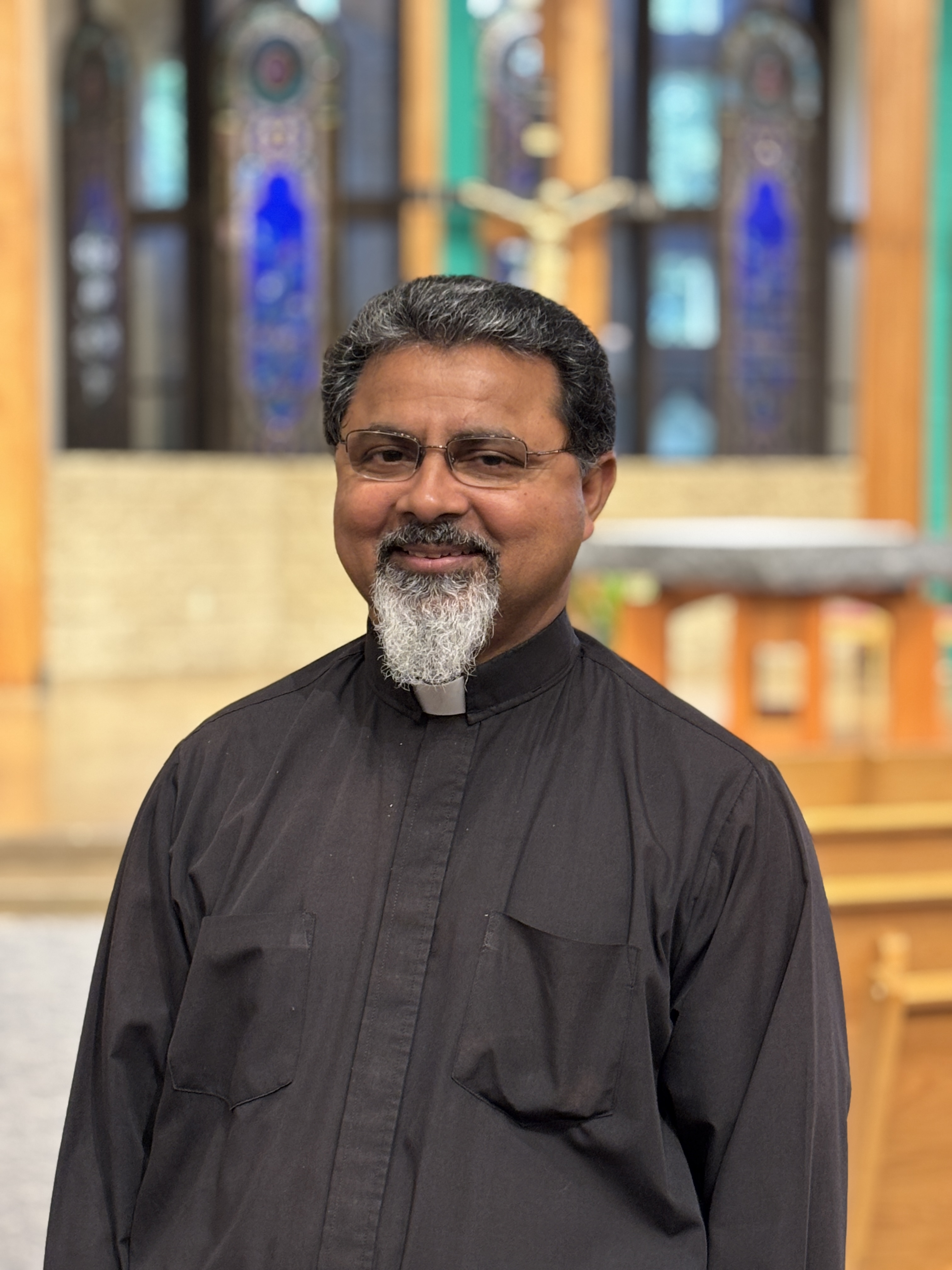
Father Shaji Pazhukkathara
Peter Julian Eymard was born in France. When he was five years old, he wandered away from his family one day. His family looked for him everywhere and finally found him in the parish church; he was standing on a stool in front of the tabernacle. They questioned him to see why he was there, and he replied, “I am here listening to Jesus.” Peter Julian Eymard joined the seminary and became a priest. He spent the rest of his life listening to Jesus and is called the Apostle of the Eucharist.
This Sunday's readings say to us that God is present even when he seems absent. The reading presents three people who face the storm in different ways: Elijah endures the storm of discouragement, Paul suffers the storm of sorrow/grief over the unbelief of his own people, and Peter faces the storm of fear on the Sea of Galilee. It is about our faith, confidence in God, and how we listen to God. God is with us always, but we encounter him in unexpected ways and places.
In the first reading, we see that, on Mount Horeb, Elijah listened to God in the tiny whispering sound. The story of Elijah’s journey to Mount Horeb was a flight from danger. At that time Ahaz was the king of Israel. He married a foreign princess, Jezebel, who worshiped the pagan god Baal. She brought with her into the royal court a sizable revenue of the god Baal. Elijah was furious because there is only one God in Israel, and it is not Baal. He challenged all 450 prophets of Baal on Mount Carmel, which ended with Elijah’s victory and annihilation of them all. Queen Jezebel was angry and decided to take Elijah’s life. Elijah fled to Mount Horeb, and he rested in a cave. God said to him to come out of the cave to meet the Lord. Elijah came out of the cave to see God. God was not in the roar of the wind, the crashing of rocks, the earthquake, but in the tiny whispering sound.
In the second reading we find an adamant plea of innocence. Paul might have been accused of abandoning Israel to preach to the Gentiles. But he is confident that he desired the salvation of Israel. Apostle speaks of his sorrow/grief for his people. Holy Spirit knows his heart and where he encounters God.
The Gospel is a continuation of the feeding of the five thousand. In the fourth watch of the night (between 3 am and 6 am), Jesus walks on crashing waves of the terrible storm at the Sea of Galilee. The OT credits God alone with authority over the sea (Job 26:11-14; Ps 89:8-10; 93:4; 107:28-31). In the book of Exodus 34:14, God said to Moses, “I AM who I AM,” and here Jesus says, "Take courage, it is I; do not be afraid." Peter here represents all of us. He wants to walk with Jesus but loses focus and is terrified. But he looked at Jesus and said, “Lord, save me.” On Mount Horeb, Elijah sees wind, fire, and earthquake but hears God in a tiny whispering sound. Jesus is the Lord, the same God who demonstrated his power over nature to the prophet Elijah. He proclaims this truth by walking on the water and stilling the storm. Before Jesus calmed the storm, he calmed the hearts and minds of his disciples. First, they thought it was a ghost, then recognized Jesus. The moment they recognized Jesus, Peter wanted to walk with Jesus on the water. The storm was there until he and Peter entered the boat.
Another image in this Gospel passage is that the Church is the boat of Peter on the rough sea. If we look at the modern world, there is every reason to be discouraged. Despite many obstacles and struggles, the Lord’s help and protection will always be there.
During the days of the Second Vatican Council, Pope St. John XXIII used to submit all his anxieties to God with this prayer every night: “Lord, Jesus, I’m going to bed. It's your Church. Take care of it!” We all know that we are safe in the presence of the Lord. The question we need to ask is whether we encounter him? And are we able to place our trust in him?


Saint Patrick Parish's mission is to joyfully proclaim, share, and celebrate the love and mercy of Jesus Christ through Word, Sacraments, prayer, and ministry.
